Ziccum and Zurich University of Applied Sciences submit joint application for Eurostars funding

Following their agreed collaboration, Ziccum AB and the team from the ICP Institute of Computational Physics at the Zurich University of Applied Sciences’s School of Engineering (ZHAW) have now submitted an application to the Eurostars funding body. The proposed project will develop 3D modelling, and ultimately a Digital Twin, of LaminarPace (LAPA) that will accelerate development and scale-up and promote tech transfer, partnering and ultimately sales.

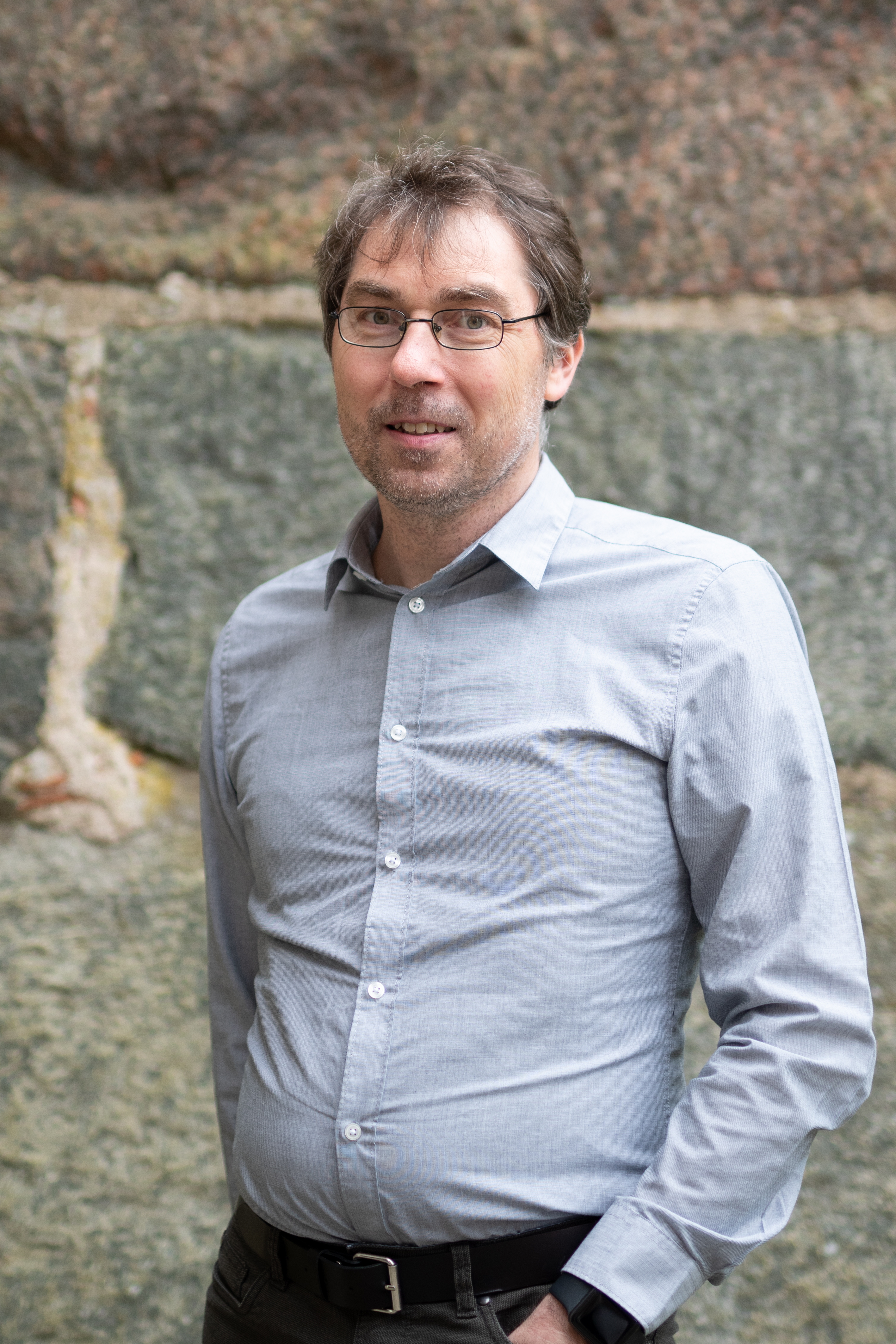
The team from ZHAW, headed by Prof. Dr. Gernot Boiger, has collaborated with the Ziccum team at Lund to produce a detailed application for their joint project, which has already generated valuable data on LAPA – Ziccum’s unique unique ambient drying system that can dry vaccines and biologics at room temperature, producing robust dry formulations that require no refrigeration or freezing. In the first phase of the proposed project the teams plan to work on 3D modelling of LAPA’s flow, particle formulation and scale-out. A projected final phase aims to further develop the 3D modeling.

Prof. Dr. Gernot Boiger, Head of Research Area Multiphysics Modelling and Imaging at the School of Engineering, ZHAW: “In this collaborative effort we haven’t just learned to work together seamlessly, we have also managed to compose a strong Eurostars proposal. This proposal will be the foundation for carrying out innovative R&D together over the coming years. I think that bringing the teams of Ziccum and ZHAW/ICP together has really worked well.”

Ziccum CEO Ann Gidner: “We’re already hard at work with our great partners at ZHAW,who share our drive and commitment to this unique and much-needed drying technology. We believe this project will significantly strengthen and accelerate the development of LAPA, delivering insights into the unique properties of the particles LAPA can formulate, and accelerating its industrialization.”

About LAPA: LAPA is Ziccum’s unique ambient drying system for vaccines and biologics. In the field of vaccines, LAPA formulates thermostable vaccines that can withstand elevated temperatures without requiring refrigeration or freezing. In the field of biologic drugs, LAPA meets the unmet need for an ambient drying method, drying delicate proteins and viruses at room temperature without the damaging effects of heat. This gives particles that typically retain robust structures and high API activity, making them thermostable – and highly valuable for novel formulation techniques.

About Eurostars: Eurostars funds innovative collaborative R&D projects across 37 member countries, specializing in projects that partner SMEs with larger companies, universities and research organizations. Eurostars is co-funded by the EU Horizon 2020 Framework Programme and EUREKA, the world’s largest public network for international cooperation in R&D and innovation.

For more information about Ziccum, please contact:

Ziccum on the move: company to attend major industry events across Europe in 2022

Ziccum AB will be intensifying its partnering and networking dialogues at a series of leading pharma industry events throughout Europe this year. CEO Ann Gidner: “As we strengthen our connections with colleagues throughout the industry, we remain confident in the unique advantages that ambient drying and thermostable vaccines represent. It’s going to be an exciting season.”

CEO Ann Gidner and Chairman Fredrik Sjövall will attend Nordic Life Sciences Days in Malmö, 28 – 29 September, and Bio-Europe, the largest industry event for biopharma professionals in Europe, in Leipzig on 23 – 26 October.

The company’s CEO together with Scientific Director Fabrice Rose will attend the New Updates in Drug Formulation & Bioavailability conference in Copenhagen on September 6, and the 23rd World Vaccine Congress Europe conference in Barcelona October 11 – 14.

Ziccum CEO Ann Gidner: “Since my appointment in May we have constantly emphasized our commitment to building new strategic dialogues and relationships within the industry. Our unique ambient drying technology for vaccines and biologics is an enormously valuable technology. Together with our Chairman and Scientific Director I look forward to sharing our science and offering at these important industry events.”

BOOK A MEETING ahead of the events with CEO Ann Gidner, Chairman Fredrik Sjövall or Scientific Director Fabrice Rose here:

Ann Gidner CEO – Mobile: +46 722 140 141
e-mail: gidner@ziccum.com

Fredrik Sjövall, Chairman – Mobile: +46 706 45 0875
e-mail: sjovall@ziccum.com

Fabrice Rose, Scientific Director: +46 709 802 520
e-mail: rose@ziccum.com

ZICCUM AB (publ) Interim report Q2 2022

INTERIM REPORT Q2 2022: 1 JANUARY – 30 JUNE 2022.

To read the digital Report click here: https://reports-en.ziccum.com/interim-report-q2-2022/

Significant events during Q2 (April-June)

  • Ziccum AB has significantly expanded its lab facilities and capabilities, particularly in the area of mRNA/LNP. Strategic investments include a new cell lab and a system for manufacturing and evaluating dry formulations of mRNA/LNP materials. On June 22, the company informed that the installation of the new cell lab was completed, enabling in-house in vitro research.
  • On June 3, it was announced that Ziccum has extended an ongoing pilot evaluation study agreement with a leading pharmaceutical corporation following the completion of the latest stage of the project.
  • On May 9 Ann Gidner took office as new CEO. Ann has 25+ years of experience from Life Science management internationally, with a significant track record in strategic development, focused leadship, deal making and sales growth. Generating steep growth in leading, international Pharma CDMO corporations took her to senior global positions in the US and Germany. She has also been leading internationalization of mid-sized Life Science companies in Sweden and Germany, as well as building up Pharma technology licencing internationally. Recent years have given experience from CEO and Board positions in listed Swedish Life Science start-ups.
  • Ziccum has been elected onto the Technical Activities Committee of the US National Institute for Innovation in Manufacturing Biopharmaceuticals (NIIMBL). NIIMBL, co-funded by the US Department of Commerce, funds and initiates a wide range of public-private research projects throughout the US.
  • On May 6, the Board of Ziccum published the decision to officially change the company’s language to English for all external communications.
  • The current LAPA system is the fourth generation in development. On April 27, Ziccum informed about the selected key targeted technology developments of the LaminarPace system – some underway, and some recently completed.
  • On April 25, a strategic sharpening was announced informing the market that Ziccum is now targeting three key vaccine platforms in its research and development work through 2022 and 2023 – driven by input from external collaborations and new internal technology capabilities.
  • During the second quarter CEO Ann Gidner has bought 15,000 shares in Ziccum. In addition, the Board members Andreas Pettersson Rohman also bought 39,333 shares and Fredrik Sjövall 10,000 shares in the Company.

Significant events during Q1 (Jan-March)

  • At the Extraordinary General Meeting held on January 18, in addition to approving the Board's proposal, it was decided to increase the limit on the number of shares and the size of the share capital in the Articles of Association, to enable the issue of the remaining 933 362 units in the private placement.
  • On January 18, an additional 2 800 086 shares and 1 866 724 warrants were registered, and all shares and warrants in the private placement are thus registered.
  • The last payments from the directed share issue were received by the company in January and February 2022, a total of 40 mSEK was added to the company after deduction of issue costs.
  • Ziccum announced on February 7 that it has become a member of the United Nations Global Compact, the world's largest corporate sustainability initiative.
  • On February 22, it was announced that Göran Conradson was terminated from his position as CEO. The company's CFO, Frida Hjelmberg, will be acting CEO for the time being.
  • On March 3, the Board released an update on strategy, goals and priorities. The company's strategy for entering into commercial agreements with industrial players has been and is clearly defined. It is based on four key priority activities:
  1. Drive an active business development agenda that proactively prepares for collaboration with existing and potential partners. This is partly to offer the opportunity to evaluate specific projects in combination with Ziccum's technology, and partly to understand the requirements placed on the technology before a decision on a license agreement can be made.
  2. Generate laboratory data that manifests and confirms the technology's capacity to dry different types of vaccines, so-called proof of concept.
  3. Develop the company's technology to adapt its functionality, capacity and quality to the licensees' required specifications.
  4. Develop conceptual plans for how Ziccum's drying technology can be adapted to the commercial scale and integrated into a commercial production environment.

With a new CEO, the Board's goal is to increase the pace of, above all, business development work – with the goal of entering into more industrial collaborations in order to evaluate LaminarPace and advance our existing collaborations into negotiations on commercial terms and license agreements.

  • On March 28, it was announced that Ann Gidner is appointed as new CEO for Ziccum, she takes office on May 9.

Significant events after the reporting period

  • On July 19, Ziccum published the selected partner for the development of its crucial new nebulizer component for the LaminarPace system. The chosen partner TEKCELEO is an innovative mechatronic manufacturer with advanced knowledge of nebulizers. The component is central to the advanced drying capabilities and scaleup of Ziccum’s LaminarPace system.
  • On July 21, it was announced that Ziccum together with the Zurich University of Applied Sciences (ZHAW) are applying for funding from the Eurostars funding body for a joint project that will develop the 3D modelling stage of LaminarPace. The project aims to strengthen, support and accelerate the development of LaminarPace – offering high-value insights into its unique particle properties, and accelerating and optimizing industrialization.
  • On August 2, Ziccum informed about a reorganisation aiming to facilitate and accelerate its new strategic focus on key projects and vaccine platforms. As part of the reorganization, Senior Formulation Specialist Fabrice Rose was appointed Scientific Director. The reorganization was implemented on August 1, 2022.

CEO statement

From vision to action

It has been a true pleasure to join Ziccum at this intense stage of business-oriented action and help setting a sharper focus for the critical development needs and industrial partnering. The company has a very competent and dedicated team, and with a more precise focus we are taking great strides forward, both in the actual experimental work and in our partnering dialogues, creating value.

During the quarter a key strategic focus on three high potential vaccine platforms was defined. Ziccum is now prioritizing three key, high-potential vaccine platforms: adenovirus vaccine vectors, adjuvanted vaccines and mRNA vaccines using LNP delivery. All three platforms are used in major Covid-19 vaccines, and subject to intense development efforts in the pharmaceutical industry.

We also streamlined the project portfolio to three high-value ongoing feasibility studies corresponding to these platforms. Two are joint with leading pharma corporations, and one with an internationally leading vaccine research institute. I was delighted to help take these dialogues forward and to introduce new significant industry players to Ziccum. We were able to finish an important feasibility study and ship the pilot evaluation material to our key pharma collaborator, to now await the analysis and feedback.

Starting in this report we give a portfolio overview, to help the understanding of the overall status of our external projects. For these projects however, collaborating with pharmaceutical corporations, one needs to respect the decision-making of the counterpart and the demand for perfect confidentiality; in pharmaceutical development, every relevant project is subject to strict secrecy due to the large business potential. Hence, one must be very careful making public predictions or disclose any details.

Internally, we had a great range of technical improvements and installations made, including powder collection equipment and nitrogen gas usage, and we were most pleased to have the fourth generation LaminarPace units installed during the quarter. We also had the new cell lab installation nicely completed. Important decisions were taken regarding the development strategy, which resulted in selection of a new nebulizer partner, Tekceleo, which we expect to give a very efficient development project like communicated. We also took an important decision to partner with the ZHAW Institute in Zurich, Switzerland to consider LaminarPace 3D modelling and jointly apply for a Eurostars grant.

The sharpened company focus and elimination of non-strategic activities provide better clarity for our hard- working team, which boosted energy and efforts. We also had the pleasure of moving into new office and lab facilities, creating a good setting for the work ahead.

All in all, we had a very intense quarter. I want to thank Frida Hjelmberg for her good contributions as interim CEO, and I am most grateful for the efforts by Chairman Fredrik Sjövall, initiating the new company focus and enabling a smooth CEO transition. We jointly want to thank our collaborators, partners and owners for excellent interaction and support.

Lund,

August 23, 2022

Ann Gidner, CEO

Q2 2022

The result for the quarter amounted to -7,882 kSEK (-5 ,228 kSEK)
Cash flow for the quarter amounted to -7,587 kSEK (-3096 kSEK)
Cash and cash equivalents at the end of the quarter amounted to 36,647 kSEK (25,706 kSEK)

Summary Financial Highlights April-June 2022 April-June 2021 Jan-
June 2022
Jan-June 2021 Jan-
Dec 2021
Net revenue
Operating result -7,873) -5,212) -14,213) -9,598) -21,117
Result -7,882 -5,228) 14,167) -9,643) -21,136
Balance sheet total 51,100 33,647 51,100 33,647 39,591
Cash flow -7,587 -3,,096 24, 374 -7, 914 -21,347
Cash and cash equivalents 36,647 25,706 36,647 25,706 12, 273
Equity ratio % 86%6 878% 86%& 87% 75%
Data per share SEK
Number of shares at the end of the period 13 ,806,142 9, 806,200 3,.806,142 9,806,200 11,006,056
Result per share before and after dilution* -0.57 – 0.55 -1.03 -1.01 -2.17
Cash flow per share -0.55 – 0.32 1.85 -0.82 -2.19
Equity per share 3.17 2.97 3.17 2.97 2.70
* Dilution effects is not calculated when the result is negative
Open post

Ziccum appoints new Scientific Director

Ziccum AB has appointed a Scientific Director, as part of a major reorganisation aiming to facilitate and accelerate its new strategic focus on key projects and vaccine platforms. Ziccum Senior Formulation Specialist Fabrice Rose will assume the new role. The reorganization was implemented on August 1, 2022.

Ziccum AB has appointed Fabrice Rose, until recently its Senior Formulation Specialist, as its new Scientific Director. Fabrice Rose is the author or co-author of 16 peer-reviewed publications on vaccine formulation. His 20 years’ plus experience in formulation and drug delivery includes ten year’s lab work specializing in the design and characterization of nanoparticulate vaccine formulations and investigating the physical stability of protein antigens.

Strong team focus

The reorganisation, the result of extensive consultation and collaboration, is an integral part of Ziccum’s new sharpened strategic focus, initiated with the arrival of new CEO Ann Gidner in May 2022. It has created new roles and clarified existing ones as the company deepens its project work and targets three key vaccine platforms.

CEO Ann Gidner: “I warmly welcome Fabrice to his new role. This reorganization will help us harness the great competence and commitment we have in-house in the best possible way. With a clear company focus and well-defined roles we can move ahead more efficiently and achieve great results together.”

Ziccum AB and Zurich University of Applied Sciences apply for joint funding on 3D modelling project of unique drying technology for thermostable vaccines

Ziccum AB, in partnership with the prestigious Zurich University of Applied Sciences, is applying for funding to Eurostars for a joint project developing the 3D modelling of LaminarPace, its unique room-temperature drying system that formulates vaccines as thermostable powders requiring no cold chain. The project is expected to support and accelerate development, scale-out and ultimately sales, tech transfer and partnering.

Thermostable vaccines that can withstand heat in any climate, anywhere in the supply chain, are in high demand – as growing numbers of national and international bodies seek to improve pandemic preparedness and establish tougher, more robust vaccines in a rapidly warming world.

Now, Ziccum AB and the Zurich University of Applied Sciences (ZHAW) are applying for funding from the Eurostars funding body for a joint project that will develop the 3D modelling stage of LaminarPace (LAPA) – Ziccum’s unique room-temperature drying system that formulates thermostable vaccines that require no refrigeration or freezing. The new application is part of Ziccum’s sharpened strategic focus on continuously evaluating soft funding opportunities that strongly match Ziccum’s offering and its current state of development.

Eurostars funds a wide range of highly innovative collaborative R&D projects across its 37 member countries. All Eurostars projects partner SMEs with larger companies, universities and research organizations. Eurostars is co-funded by the EU Horizon 2020 Framework Programme and EUREKA, the world’s largest public network for international cooperation in R&D and innovation.

The project will be carried out by the ICP Institute of Computational Physics at the School of Engineering (SoE) at ZHAW, and the Ziccum team at its labs in Lund, Sweden. An initial workshop between the two teams took place in Lund, Sweden on June 15 and intense authoring of the grant application is now underway.

The project aims to strengthen, support and accelerate the development of LAPA – offering high-value insights into its unique particle properties, and accelerating and optimizing industrialization. The first phase will focus on modelling flow, particle formulation and scale-out. A projected final phase will further develop the 3D modeling to accelerate sales, partnering and tech transfer to pharmaceutical and CDMO (Contract Development and Manufacturing Organizations) partners.

Strengthened focus on soft funding
As stated, Ziccum now has a sharpened strategic focus on identifying and prioritizing soft funding, opportunities that best match the company’s offering and current phase of technology development. As a consequence, the company has decided not to apply for the previously-mentioned CEPI funding as this is targeting well-established manufacturing organizations that can implement thermostable vaccine facilities globally. Instead Ziccum is identifying other funding projects for earlier-stage companies, enabled by strong current interest in and demand for thermostable vaccines and novel drying methods that can achieve them.

Ziccum CEO Ann Gidner: “3D modeling is an integral part of our technology development – so the opportunity to partner with such an expert team and receive funding for this stage is a win-win for us – and, ultimately, our prospects and partners. 3D modelling and its potential resulting tools will offer partners the chance to explore the benefits to be gained from ambient drying from every angle. Our partners at ZHAW are fully committed to the project and our unique ambient drying methodology, and morale and momentum are high.”

Ziccum selects partner for development of crucial new nebulizer component

Ziccum has chosen TEKCELEO, an innovative mechatronic manufacturer with advanced knowledge of nebulizers, for the development of its new nebulizer. The component is central to the advanced drying capabilities and scaleup of Ziccum’s LaminarPace system, which formulates vaccines as thermostable powders that require no cold chain transport.

Ziccum has chosen TEKECELO from competing vendors, including larger suppliers with less advanced knowledge of nebulizers, for the further development of its core nebulizer component. It is an innovative manufacturing company specializing in mechatronic and piezoelectric technology with an advanced portfolio of nebulizers, headquartered in Mougins, just outside Cannes, France.

Positive onsite audit
The decision follows an onsite audit of the company facilities carried out in June by a Ziccum team of senior formulation specialist Fabrice Rose, technical operation manager Rasmus Lund and senior project manager Stefan Qvarnström.

Fabrice Rose: “The nebulizer is a core component of the LaminarPace (LAPA) ambient drying system. The more accurate we can be with the humidity and spray rate created at nebulization, the better prepared we will be for progressing through each step of GMP compliance.”

Ziccum CEO Ann Gidner: “We are confident this will be a productive collaboration. We look forward to progressing this vital work.”

Ziccum expects to receive the first prototypes of the new nebulizer by Q4 2022.

Three key learnings as collaboration between Ziccum and Emerging Virus Unit at Aix-Marseille University draws to a close

In Ziccum’s recent major strategy renewal it sharpened its focus onto three key vaccine platforms and streamlined its R&D projects down to three key partnerships. The company is also pleased to now conclude its long-term collaboration with the Emerging Virus Unit at Aix-Marseille University. The productive collaboration advanced the development of Ziccum’s LaminarPace technology in three major ways, says Ziccum Senior Formulation Specialist Fabrice Rose.

The Emerging Virus Unit, located close to the faculty of medicine in Marseille, is one of Europe’s leading virology labs. Its activities relate to preparing for epidemic phenomena and implementing diagnostic, therapeutic and preventive countermeasures. The unit does not carry out pharmaceutical R&D and does not develop new vaccines, unlike Ziccum’s current three partners in its streamlined project portfolio.

In its two-and-a-half-year long collaboration the Unit has been a supportive partner with a strong shared commitment to advancing thermostable formulations of biologics and viruses for easier storage and transportation.

Fabrice Rose: “This collaboration played an important role in developing LaminarPace (LAPA), our ambient drying system. In particular, working on solving three key challenges led to valuable learnings and the development of many new features, despite a general slow-down during the Covid-19 pandemic.”

Safety and biosafety: Key learning #1
As a virology rather than pharmaceutical facility, in Marseille LAPA was installed for the first time in a Biosafety Level 3 (BSL-3) laboratory. BSL-3 labs are for the study of infectious agents that can cause lethal infections. Research must be carried out in sealed, sterile biosafety environments designed to be easily cleanable.

Fabrice Rose: “This taught us a lot about which issues to improve for long-term use of LAPA in that type of facility and led to new features such as our sealed glove box and powder collector cup, plus to the exploration of new ways of sterilizing and cleaning the system. We now have BSL-2 status in our facility in Lund and what we learned at Marseille gave us valuable lessons in achieving that.”

Formulation: Key learning #2
Fabrice Rose: “This was the first time we tested and worked with LAPA on live viruses. It gave us excellent insights into the challenges of working with these types of vaccines and we made significant progress in our knowledge of new formulations that will stand us in good stead for future projects.”

A specific example was Ziccum’s work on envelope viruses. Fabrice Rose: “These are one of the most challenging types of vaccines to stabilize. If you damage the viral envelope in any way, your vaccine won’t work anymore. Thanks to Marseille we started to identify much better where stress situations might happen and work on new formulations that would overcome them. It is all about how you combine formulation and process design and our experience in Marseille gave us key insights into that.”

Humidity control: Key learning #3
“In Marseille we identified two main issues around humidity: The need for better control of humidity inside LAPA, and the need to better control the system’s surrounding humidity. Our work solving these positively impacted LAPA’s development enormously,” says Fabrice Rose.

Despite a slow-down during the Covid-19 pandemic, commitment was strong on both the Swedish and French side: “LAPA is an entirely new unit operation, so it was vital to be able to map out where we were with the system and how best to drive development. This project enabled that and ignited a range of ideas that will play a crucial role in our commercial offering.”

Ziccum installs new cell lab enabling in-house in vitro research

Lund, June 22, 2022 —Ziccum AB (publ) (‘Ziccum’) has completed the installation of a new cell lab, on schedule, as part of its strategy of intensive technology development. The new cell lab increases the company’s capabilities in its own mRNA/LNP research and data generation. It will enable Ziccum to carry out in vitro studies on thermostable formulations of vaccines and biologics that do not require freezing or refrigeration to be stored or transported worldwide.

On April 26 Ziccum announced that it was in the process of installing a new cell lab to enable in vitro studies and increase its in-house capabilities in mRNA/LNP research. The target for completion was Q2 2022. That target has now been reached on schedule.

The new lab is part of Ziccum’s intensive strategy of stepwise technology development, running in parallel with a new streamlined portfolio of research projects focused on three targeted vaccine platforms.

mRNA/LNP (Lipid Nanoparticle) materials are seen by many as representing a new era in vaccinology, and were the crucial delivery vehicles that enabled both the Pfizer-BioNTech and Moderna COVID-19 vaccines. LaminarPace (LAPA), the company’s ambient drying system, achieved encouraging results with early dry formulations of LNP materials, which lead to the focus on the mRNA/LNP platform.

However, the new cell lab will not only strengthen Ziccum’s capabilities in mRNA/LNP. In the longer term it will offer increased opportunities to generate biological data on other platforms and substances.

Since September 2021 Ziccum’s technology development has accelerated significantly, driven by a highly structured Quality by Design approach that has led to important new features that have improved safety, cleanability and further reduced humidity of the LAPA system. The current LAPA, the fourth generation of the system, underwent an intensive Factory Acceptance Test, and a Site Acceptance Test on its installation at Ziccum’s facilities in June.

Director of Development Anna Lönn: “Structure, focus and scrupulous documentation are essential for successful industrial development. Since September this approach has accelerated development and delivered significant new enhancements and features. We are becoming more confident and mature, in parallel, in both our technology and project development. The new cell lab will enhance and accelerate our data generation and capabilities.”

From vision to action: new Ziccum CEO update

On May 9, 2022, Ann Gidner became new CEO of Ziccum, hitting the ground running with a raft of new strategies that included targeting three key high-potential vaccines, streamlining the company’s project pipeline and strengthening the focus on industrial partnering. Ahead of a profile in Dagens Industri, Ann Gidner expands on her first month in office, and the operations and opportunities Ziccum is focusing on.

On March 11, 2020 the pharmaceutical industry entered a new era, as the WHO declared COVID-19 a global pandemic: “The speed at which new vaccines were developed is fantastic, and that impetus and investment continues,” says Ann Gidner. “For us it means we no longer have to sell the big-picture benefits of thermostable vaccines. Now is the time for action in our work with pharmaceutical companies and CDMOs (Contract Development and Manufacturing Organizations). We are prioritizing building direct discussions and projects with those organizations.

“There are several synergies and strong connections to previous experiences and positions in my career and I believe I have a relevant network for enabling new partnering dialogues. We have had several initial discussions with industrial players since I started, and I experience a high level of interest in Ziccum’s technology. My specific experience driving new businesses for CDMOs will also be crucial for my position at Ziccum as this group of companies are an important new target for us.”

From vision to action – platforms and projects
Ann Gidner has brought a sharper focus to Ziccum’s projects and pipeline work in her first month as CEO. The company has streamlined its project portfolio down to three high-value ongoing feasibility and evaluation studies – two with leading pharma corporations, and one with a major research institute in vaccination in the Nordic region. Ziccum is also now prioritizing three key, high-potential vaccine platforms, including mRNA.

“It’s all about action and applicability,” says Ann Gidner. “We have eliminated demanding low-value projects and are focusing only on projects which will help accelerate our technology from concept to first licensing deal. Those projects which deliver absolutely the most value for us and our clients – in terms of patent potential and landing licensing deals.”

Ziccum recently announced that an ongoing pilot evaluation study agreement with a leading pharmaceutical corporation has been extended following the completion of the latest stage of the project. Ziccum will ship the dry-formulated study materials from its facilities in Lund to the corporation’s labs at the end of June, where they will be evaluated.

Explore Ziccum’s three key vaccine platforms.

Strong mRNA focus
Ziccum has made major strategic investments too into new facilities and equipment for mRNA/LNP (Lipid Nanoparticles), seen by many as representing a new era in vaccinology. LaminarPace, the company’s ambient drying system, has already achieved first results with early dry formulations of LNP materials, a dataset which will enable further optimization for these crucial delivery vehicles that enabled both the Pfizer-BioNTech and Moderna COVID-19 vaccines.

“Our work with LNP and mRNA materials is particularly exciting,” Ann Gidner says. “Remember, people were skeptical about mRNA COVID-19 vaccines at first, but the drive, research and investment in developing these created enormous opportunities. And those opportunities continue today. mRNA is one of the most high-potential areas in the industry right now.”

Read about Ziccum’s focus on mRNA vaccines here

Growing industrial maturity
Ziccum is continuously developing the industrial capabilities of LaminarPace, aiming for eventual GMP manufacturing status. The current system is the fourth generation, with nitrogen having replaced air, to further reduce moisture, a new sealed powder collector, to increase safety, and an advanced array of sensors to measure drying flow.

Ann Gidner: “We are very happy to just have the fourth generation equipment installed this week. Our technology development is maturing rapidly, achieved in parallel with ongoing project work, resulting in increased confidence from our external collaborators.”

“I have taken several technologies and products through to market and licensing deals, and I am convinced that Ziccum has excellent potential.” says Ann Gidner.

Read more about LaminarPace’s technology development here.

Long-term financing
Another important strategic objective is to secure long-term financing for Ziccum, increasingly important as global financial conditions are becoming more challenging.
“Generating revenues from early co-development and feasibility programs is one very important factor which can contribute significantly. Another opportunity is to continuously evaluate soft funding in the form of specific industry grants where we can identify a strong match with our technology and offering. We are currently working actively on a selection of soft funding opportunities where we believe the chances are favorable for being granted substantial contributions to our long-term financing plan.”

Posts navigation

1 2 3 9 10 11 12 13 14 15 18 19 20